
VISCOSE · FABRIC SELECTION GUIDE
Woven viscose fabric: choose for the garment's shape.
The drape, surface and care needs of the actual sample matter more than a general material name.
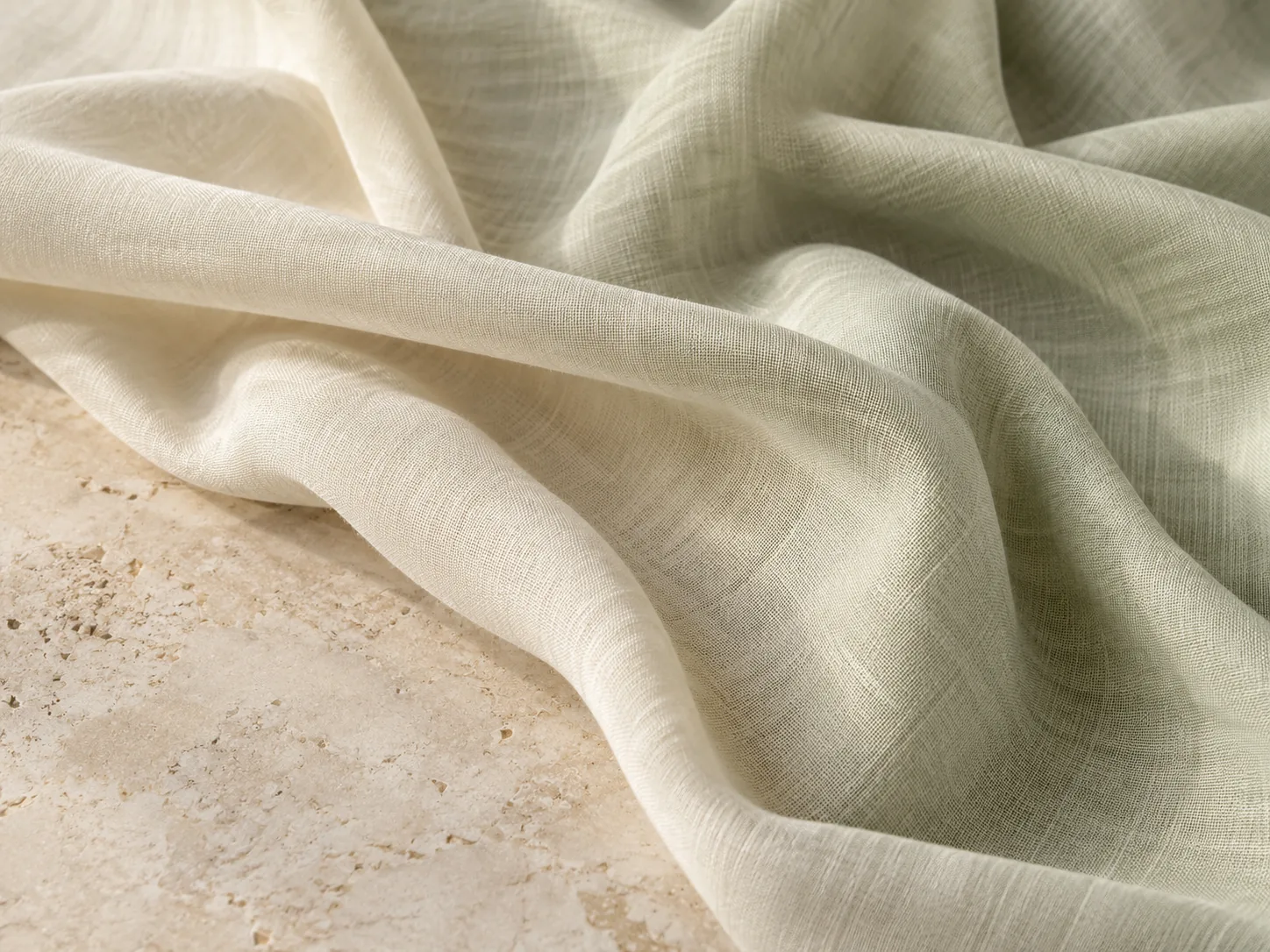
Viscose is a regenerated cellulose fibre. For garments, buyers often explore viscose samples to assess their drape, surface and feel. These qualities vary with the fibre type, weave, weight, dyeing and finishing, so they need to be evaluated on a specific sample.
Start with the silhouette
For garments that need fluid movement, check how the fabric hangs and how it behaves when sewn into a representative detail. If a defined or structured shape is needed, assess its body and stability after processing. Do not rely entirely on photographs or the feel of a small swatch: garment length, lining, cutting lines and sewing techniques all affect the finished silhouette.
What should you check on the sample?
- Composition: confirm the proportion of viscose and any blended fibres.
- Surface and drape: inspect both sides under light and sew a sample large enough to assess the result.
- Thickness, width and weight: record the units and tolerances; check usable width after laying out the fabric.
- Dimensional stability: wash or trial-process it using the intended instructions, then measure again before bulk cutting.
- Colour and colourfastness: test a sample under intended use conditions and confirm batch consistency.
- Care: ask about washing, drying and ironing instructions for the specific fabric and finished garment.
University of Georgia Cooperative Extension notes that rayon, a regenerated cellulose fibre group that commonly includes viscose, may crease, become weaker when wet, and shrink or stretch depending on its treatment. This is general guidance for planning sample tests; it is not a guaranteed specification for every viscose fabric.
Sew a trial before confirming the order
If replacing another material with viscose, make a sample using the intended design, seams and finishing process. Try wearing it or simulate its use, wash-test it if needed, then reassess its shape, surface and dimensions. This helps identify unsuitable characteristics before bulk cutting.
When contacting Lâm Anh, send photographs or an approved sample, the planned garment, desired composition, colour, width, weight and expected quantity where known. Lâm Anh will discuss the actual sample and the information that needs confirmation before providing a quotation.
Reference: University of Georgia Cooperative Extension — Understand Your Fibers. Confirm specifications and care instructions against the label, actual sample and specific finish.